









LinX CGMS – for athletic growth and health optimization

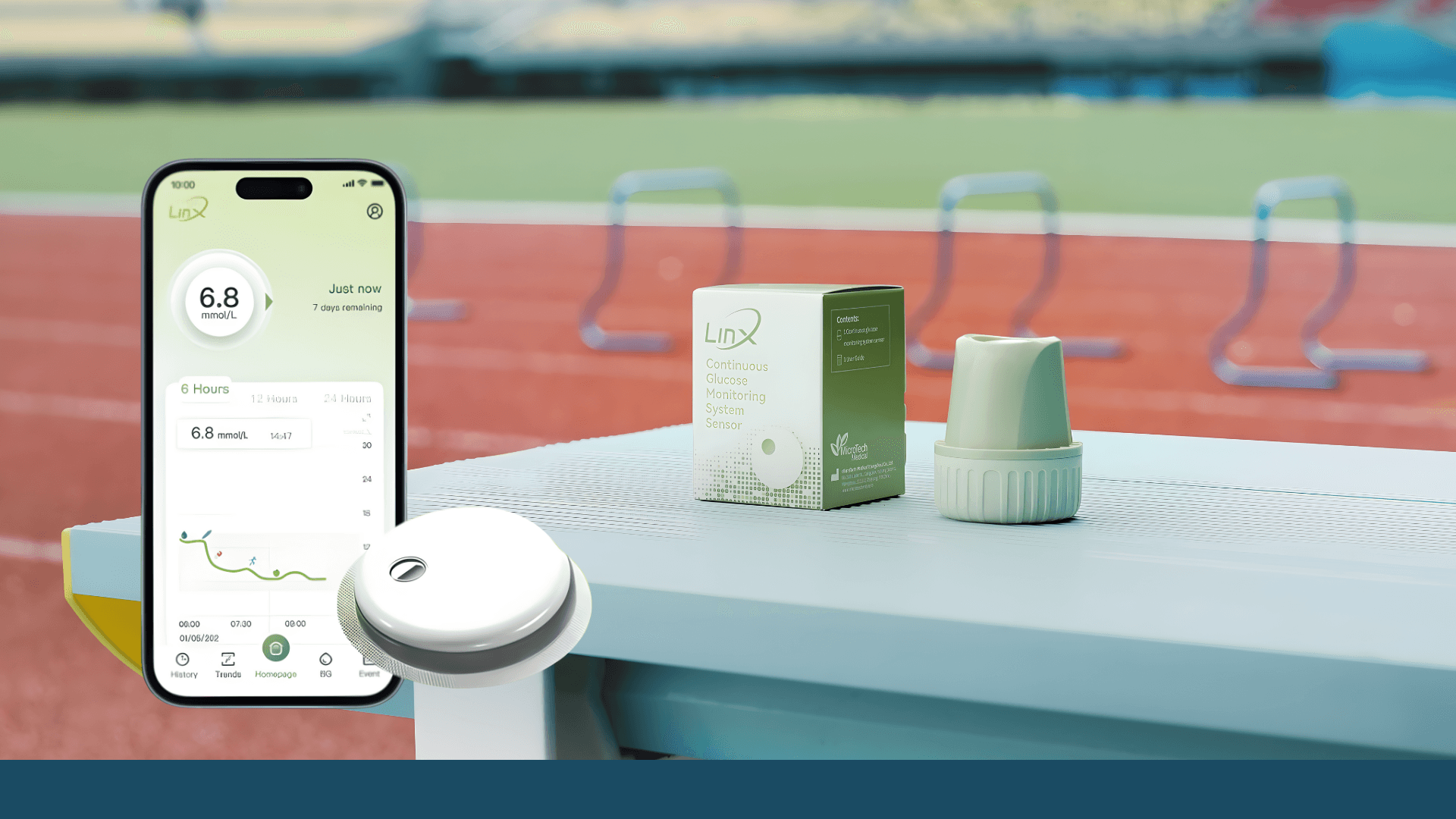
It has long been a myth in biohacking, healthy lifestyle and sports circles that Continuous Glucose Monitoring (CGM) is a tool used only by people with diabetes. Technology is evolving, and more and more people without diabetes are considering using CGM as a way to gain real-time insight into their metabolism, nutrition, training and glucose stability. The LinX CGM sensor, with its technical features, can be one such tool. However, it is important to remember that a CGM sensor cannot replace the monitoring and diagnosis of a healthcare professional. The tool can provide a medical professional with valuable information on which to make decisions about nutrition, physical activity, etc.
Who might be interested in such a tool?
- Athletes (amateur and/or professional) who want to optimize energy use during training and competition.
- People who plan to make lifestyle changes (diet, meal plan, time schedule) to see their effects in real time.
- Those diagnosed with metabolic risk factors (e.g. prediabetes, insulin resistance).
- Biohackers and health enthusiasts who are looking for deeper data about their physiology.
- Health-conscious individuals (without diagnosed diabetes) who want to notice glucose fluctuations early and take preventive action.

About LinX CGMS
The LinX CGMS combines advanced technology and ease of use, offering an accurate, reliable and convenient glucose monitoring solution for everyday use. Below are the key technical features that make this system a safe and practical choice for active people and those who want to better understand their metabolism. These features allow the sensor to operate comfortably and reliably in everyday life, with minimal intervention from the user.
- Real-time glucose data - The sensor automatically updates data every minute, so there's no need to manually scan the sensor.
- Calibration is not mandatory (the sensor is already calibrated at the factory) - manual calibration is possible if the user wishes.
- Sensor usage duration — up to 15 days per sensor.
- Sensor size and design — 22 mm diameter, 4.2 mm thickness, 2.2 g weight; compact and discreet.
- Low daily costs - Optimized sensor lifetime to reduce costs.
- Shelf life - up to 16 months from the date of manufacture.
- Water resistance - can be used in the shower, swimming up to 1.5 m deep for more than 30 minutes.
- Wireless connection - Bluetooth 2.4 GHz.
- App functionality — trends, historical data, alerts about critical levels, ability to share with a doctor. Ability to share data with up to 20 people.
- Measurement range - approximately 2.0-25.0 mmol/L
- Operating temperature — 5–40 °C.
How can LinX CGMS help an athlete or active person?
Using LinX CGMS in sports or active lifestyles, you can obtain data that is not usually readily available. Here are the main applications and benefits:
01. Real-time information on energy consumption
Glucose levels can change significantly when changing sports, training intensities, and loads. The data obtained from LinX CGMS provides insight into how the body responds to the load. This allows decisions to be made to optimize the load intensity – it could be increased, decreased, or other decisions to be made.
02. Helps choose optimal nutritional intake (food, carbohydrates)
With LinX CGMS, you can see how your glucose responds to specific meals or carbohydrate sources—which combinations cause fewer spikes or sharp fluctuations. This allows you to make decisions about meal adjustments or gain validation for your chosen meal plan.
03. Better recovery and reduced risk of “overeating”
Post-workout glucose levels can help determine how quickly your body is using up sugar or glycogen stores, and whether additional nutrition is needed. This will allow you to avoid relying solely on your own habits or the prevailing beliefs about what, when, and how you should eat after a workout. You may not need it, or on the contrary, a meal may help your body recover better and achieve your goals more effectively.
04. Early warning of hypoglycemia or hyperglycemia
Even people without diabetes can experience abnormally low blood sugar levels (especially during prolonged exercise or on an empty stomach). The LinX CGMS can alert you when your levels are approaching a critical point. This way, you can monitor your blood sugar levels and ask your healthcare professional what action you should take.
05. Lifestyle optimization
LinX CGMS data can reveal “bad” food combinations, meal times, the impact of sleep or the impact of stress on glucose levels. With this information, you can better adjust your diet, exercise regimen, sleep and stress management. This information is certainly a great addition to the everyday life of smartwatch users, providing information on sleep quality, stress levels, etc. As a result, you will be able to make informed and fact-based decisions to improve your health and quality of life.
06. Personalized trainer/view of your metabolism
This data can complement heart rate, oxygen uptake (VO₂) and other fitness data. Together, the analysis can provide a broader picture of how the body is really doing.
Limitations, Caution, and Ethics
While CGM technology is exciting, there are several aspects that should be considered:
- Many studies are in people with diabetes; evidence of benefits in healthy people is still limited, it is definitely recommended to consult a medical professional, monitor your feelings, etc.
- There is a measurement delay between interstitial fluid and blood glucose, especially during rapid changes in levels.
- Movement, sweating, pressure on the sensor (e.g., when lying on top of it) can affect the accuracy of the measurement (“compression lows”).
- Without a doctor's interpretation of the data, there may be a tendency to overdo it or make incorrect changes to diet or exercise.
- The possibility that the data will cause excessive attention or be used obsessively.
- Questions and answers
01. Can LinX CGMS completely replace blood glucose measurements for pricks?
No, the LinX CGMS is intended as a supplementary view and will not always be accurate in times of hypoglycemia. Your healthcare provider may still request a prick measurement as a reference.
02. Is it safe to use while exercising (sweating, moving, swimming)?
Yes - LinX is IP68 waterproof and can operate at depths of up to 1.5m for over 30 minutes. However, situations of intense movement or mechanical pressure (lying on top of the sensor) may affect its accuracy.
03. How often should the sensor be replaced?
The LinX sensor works for up to 15 days. After that, it must be replaced with a new one to continue measuring reliably.
04. Will using CGM help me find out if I have diabetes?
CGM is not a diagnostic tool. If your data shows chronically elevated glucose levels, you should have blood tests and consult your healthcare provider.
05. Is the use useful for people with prediabetes or insulin resistance?
Yes, it can help you understand how diet, overeating, exercise, or sleep affect glucose in real time, allowing you to make early adjustments to your lifestyle habits.



































 Free shipping on orders over €100
 Pay in installments or use leasing - for orders over €75. Learn more ›