







How to prepare for a marathon or half marathon?


Preparing for a half marathon or marathon is a process that requires patience, discipline, and understanding of your body. Many runners start with enthusiasm but without a structured approach, which often leads to overtraining and injuries. To understand how to prepare properly and safely, we invited marathoner and triathlete Raitis to a conversation.
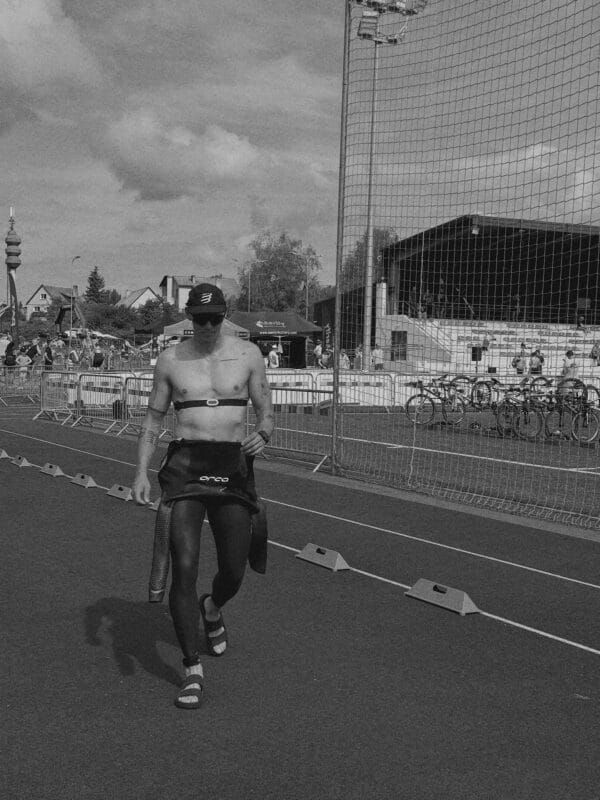
Raitis has several years of experience in long-distance endurance running. He has run seven official marathons, his personal best being 2:38:10 at the Valencia Marathon in Spain. The result is impressive considering that elite runners complete the distance in around 2:20:00, while the average time for participants is between 4:30:00 and 4:45:00.
Raitis has also participated in a Half Ironman triathlon, as well as several trail races, including two Sigulda Mountain Marathons. He is currently training for a full Ironman and preparing for the 85 km Gauja Trail. In parallel, he shares his experience with other runners, helping to structure their training and prepare for competitions in his hometown of Jelgava.
Through Wright's experience, we want to share practical advice with you, rather than theoretical knowledge. You may find these tips useful to reduce your risk of injury, whether you want to run a marathon, 5K, 10K, or simply improve your fitness. These recommendations are for anyone who wants to start running and do it as safely as possible.

How can a beginner properly start preparing for a half marathon or marathon?
Many people who start running most often focus on pace and kilometers, but for beginners these are not the main indicators. Heart rate, regularity of training and time in motion are much more important. If you run too fast, the body is not able to recover properly and the risk of injury increases significantly.
At first, running often means a very slow pace or a combination of running and walking. Sometimes it can even be a brisk walk – and that’s perfectly normal. Starting out too fast significantly increases the risk of injury, which can completely sabotage your training or even stop it altogether in some cases.
Is training time or kilometers more important?
For beginners, time spent exercising is much more important. 30–60 minutes of exercise is perfectly sufficient. The main thing is to gradually accustom the body to the load. Ideally, you should train 3-4 times a week, but 1-2 workouts a week are better than nothing. Regular exercise is always better than occasional overtraining.
Therefore, when starting to run, I always recommend focusing on regularity and heart rate rather than distance or time.
What is the optimal heart rate for beginners for a 30-60 minute run?
For most beginners, the optimal heart rate will be around 60–75% of maximum heart rate, of course, this depends on many factors, age, weight, physical fitness, etc. Practically and most often it is often in the range of 120 to 150 beats per minute.
A good indicator is the conversation test – if the runner can freely talk in full sentences during the run, the intensity is correct. If it is only possible to say a few words, then the pace is too high and should be reduced.
How long does it take to prepare for a half marathon?
A safe and realistic approach for most beginners is 6 to 9 months of regular training. During this time, it is important to gradually increase the duration of training, not the pace. A half marathon is not just about distance - it is about the body's ability to move for a long time. I believe that it is much more productive to endure your first challenge, no matter how long it is, and get satisfaction, than to force yourself and withdraw due to injury or insufficient physical preparation - endurance.
What training structure do you recommend?
For most runners, the 80/20 rule works well – about 80% of their training is easy and only 20% is more intense. This helps with long-term progress and significantly reduces the risk of injury.
In addition to running, strength training is also a very important component. At least 1-2 times a week, you should train your leg muscles and core muscles – your abdominal and back muscles. This helps maintain a stable movement technique and reduces the load on your knees, ankles, and lower legs.

The most common running injuries and how to avoid them
What injuries do runners most commonly face?
One of the most common problems is shin splints . I encountered this after my first marathon, when I wasn't prepared enough.
Also common are:
runner's knee,
Achilles tendon irritation,
ankle overuse inflammation.
The most common cause of these injuries is too rapid an increase in load, insufficient recovery, or poor muscular stability.
How can the risk of injury be reduced?
There are several very practical principles:
- do not increase the load by more than 10% per week;
- include strength training regularly;
- not to train on “good days”;
- At the first sign of pain, reduce the load rather than ignoring the symptoms.
Running is not about rapid progress in the first few months. It's about patience and regularity.
Orthoses, tapes and compression – when do they help?
Can orthotics and tape help runners?
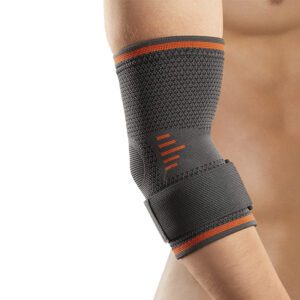
In my experience, taping, compression stockings, and orthotics can be very good support both during recovery and for prevention during higher loads or during the competition period. They help stabilize joints and reduce stress on problem areas.
It is important to remember that orthoses and tapes are aids, but they do not replace a properly planned training process or a doctor's consultation if an injury has occurred. Symptoms should definitely not be ignored and thought that they will miraculously pass. It is important to know your body and, if you have suffered an injury, use aids to prevent it from recurring. Of course, structured training helps to avoid injuries. Sometimes, with minor injuries and appropriate auxiliary materials - orthoses, tapes, compression stockings, etc., it is possible to continue training moderately, reducing the load in order to maintain physical fitness. However, symptoms should not be ignored if the pain increases significantly during or after training, swelling appears, etc., which indicates a worsening of the situation.
Recommendations from RAL specialists
Our range of products includes various types of orthoses, tapes, bandages, etc., which help both in the case of injuries during the recovery process and as a preventative measure if a person has already suffered an injury but wants to maintain an active lifestyle and prevent injuries.
- Knee orthoses can be used to stabilize the knee – Flexible and breathable knee orthosis DonJoy FortiLax (injury prevention in an active lifestyle, mild or chronic knee injuries), Knee orthosis – K18 (support and protection for sports activities, in cases of mild instability, injury or bruise),
- Functional elastic thigh bandage - provides support and compression for the thigh muscles;
- Ankle orthoses or elastic supports are useful for ankle stability - Ankle orthosis - Elastic Ankle Support - P8 (for prevention of sports injuries, inflammatory processes), soft ankle orthosis with adhesive tapes (Crossover Elastic Ankle Support) - P5 (for minor injuries, sprains, prevention of sports injuries)
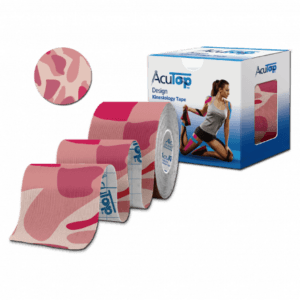
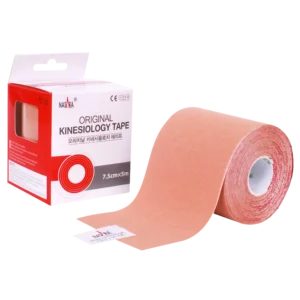
- Kinesiology tape can provide additional muscle and tendon support - Nasara Plus+ 5cm x 5m kinesiology tape , AcuTop 5cm x 5m kinesiology tape .
- Massage balls - Massage Rehabilitation Ball , in various sizes - helps relax muscles, also effective for foot massage, rehabilitation ball "Peanut " - effective for muscle relaxation, including foot massage. All rehabilitation and massage balls .
Wright's top advice for runners
Running is a long-term process. If you learn to control your load, listen to your body, and train regularly, progress will come naturally. The key is not to train faster, harder, or longer, but to train smarter. Although this approach requires patience, it provides better results in the long run and certainly more satisfaction when you achieve your goal!































 Free shipping on orders over €100
 Pay in installments or use leasing - for orders over €75. Learn more ›