






Winter injuries. How to help yourself during recovery?


2025. / The winter of 2026 pleases us with snow, frost and the opportunity to indulge in real winter fun! Skiing, snowboarding, and ice skating allow us to be physically active. However, in slippery weather, even going to work or the store can be a challenge. Slippery sidewalks, mountain trails, and winter sports also increase the risk of various injuries. Most often, these occur as a result of falls, and while the injury does not always mean a fracture, it often results in sprained ligaments, damaged joints, or soft tissue injuries that require stabilization and proper recovery.
The most common injuries in winter
These injuries usually occur after an unfortunate fall. The most common injuries are to the knees, ankles, fingers, and wrists – parts of the body that help cushion the fall.
Knee injuries
The knee is one of the joints most commonly injured during falls and sudden movements. Slipping on ice or landing badly while skiing or snowboarding can cause the knee to rotate or overuse, which can lead to ligament sprains, joint instability, soft tissue damage, meniscus irritation, swelling, and pain during movement.
In cases where the injury is not a fracture, ligament tear, or the like, knee orthoses, such as the Elastic Knee Support – K16 or GenuTrain knee orthosis , help in the recovery process. They help stabilize the joint, reduce the load and allow you to maintain mobility during rehabilitation. For more active movement and sports, the flexible and breathable DonJoy FortiLax knee orthosis is also suitable. These orthoses are suitable for adults and adolescents.
The knee brace designed for children is made of breathable material and is available in 2 sizes (2-6 years old and 6-12 years old).
Ankle and foot injuries
Slipping or landing badly can cause the ankle joint to twist, causing ligament sprains, swelling, and pain that can significantly limit movement.
For stabilization and safer movement, the TOBIPLUS Lace-Up stabilizing ankle orthosis is often used, which provides good support while maintaining freedom of movement and comfort. The solid ankle orthosis – Surround Ankle – is used during the rehabilitation period, during recovery from sprains, as well as after fractures and other injuries, to prevent instability. This orthosis provides high comfort and even pressure, as it has gel-filled pads inside that fit perfectly to any ankle.
Pediatric Orthosis: Ankle Sprain Boot – Pediatric Walker – helps stabilize the ankle and aid in the recovery of children with traumatic ankles. It is suitable for children with a foot length of 14 – 21 cm or shoe size 21 – 32.
Back injuries
The back, especially the lumbar region, is often injured during falls or sudden changes in body direction. During winter sports or slipping on ice, the muscles and ligaments of the back can be overstretched, causing pain, tightness, and movement restrictions. Such an injury often does not require specific treatment, but discomfort during movement prevents you from fully performing your work duties or going about your daily routine.
In such cases, stabilizing belts, such as the DonJoy Lombostrap or M1/M10 back belts , help, providing back support, reducing strain, and helping you return to daily activities more safely.
Elbow and wrist injuries
During a fall, a person instinctively tries to protect themselves by leaning on their hands, which is why elbow and wrist injuries are very common in winter. In such cases, ligament sprains, joint irritation or soft tissue damage can occur, which can make daily activities and movements difficult. Sometimes, significant finger injuries and even finger fractures also occur.
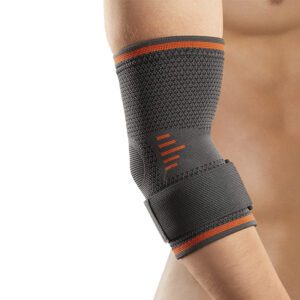
For stabilization, the Elbow Orthosis R15 can be used, as well as specialized orthoses, such as: boxer's fracture orthosis for the 2nd and 3rd toes , which helps ensure proper joint position and promotes healing.
Children often recover from wrist injuries with an immobilizing wrist orthosis . It has an aluminum wrist splint that immobilizes the wrist, and a splint located on the back that provides support with enough rigidity to immobilize wrist movement.
A children's elbow orthosis helps during the recovery period, both after a minor injury and after a fracture - removal of the cast.
Thumb injuries
Thumb ligament injuries are also common during winter sports, especially among skiers. The DonJoy ErgoForm thumb orthosis is suitable for stabilization and protection, providing movement control and reducing pain.
Why are orthoses important during recovery?
After injuries that are not related to bone fractures, proper joint stabilization and support are very important to ensure safe and effective recovery. Orthoses are one of the most commonly used solutions that help reduce the load on the injured area, while allowing you to maintain the necessary mobility for daily activities.
If the injury is not related to a fracture, orthoses help:
- stabilize the joint,
- reduce pain and swelling,
- prevent repeated injuries,
- maintain freedom of movement,
- accelerate the rehabilitation process.
A properly chosen orthosis allows a person to maintain an active lifestyle even during recovery.
When should you definitely consult a specialist?
If severe pain, severe swelling, limited movement, or a feeling of instability in the joint occurs after an injury, it is important to consult a doctor or rehabilitation specialist to choose the most appropriate treatment and stabilization solution.
A safe winter starts with proper protection
Winter activities are a great way to stay healthy and fit, but it's also important to take care of joint protection and proper rehabilitation after injuries. Modern orthoses provide effective stabilization while allowing for freedom of movement and comfort.





























 Free shipping on orders over €100
 Pay in installments or use leasing - for orders over €75. Learn more ›