Free shipping on orders over €100
 Pay in installments or use leasing - for orders over €75. Learn more ›





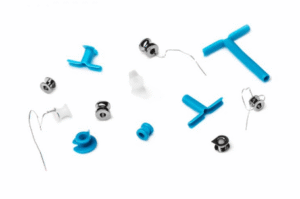
Ear ventilation tubes
Ear ventilation tubes of various materials, types and sizes
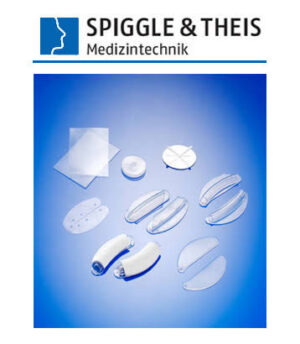
Silicone plates
Silicone plates of various sizes, shapes and types.
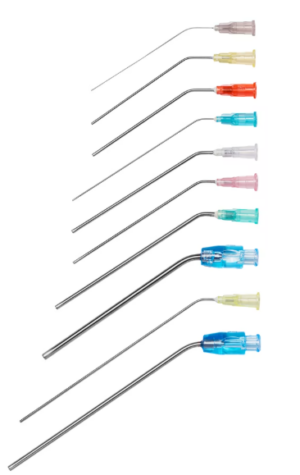
Pump tips
Pump tips or suction cannulas are designed for professional use in ear, nose and throat procedures. Spiggle & Theis offers disposable tips in various lengths and diameters, allowing the specialist to choose the appropriate option for the procedure.
Pump tips for various ENT procedures
The manufacturer’s range includes models for otology, rhinology and laryngology. Their design, dimensions and connections vary depending on the intended application. Some models have a suction control opening.
Main features
- Intended for single use.
- Angled stainless steel cannula.
- Rounded tip end.
- Various lengths and diameters.
- Luer or Luer-Lock connection depending on the model.
- The manufacturer’s range includes sterile products.
Disposable tips do not require reprocessing after use. When choosing a product, check its size, connection type, packaging and compatibility with the suction system used.
Additional information and ordering
To clarify available pump tips, their sizes and ordering options, contact the RAL team.
The product is intended for professional use according to the manufacturer’s instructions.


Renasys Touch – negative pressure wound therapy system
The Renasys Touch Negative Pressure Wound Therapy System is a reliable and easy-to-use traditional NPWT system. It provides continuous or pulsating adjustable pressure for versatile and effective therapy.
One pump for all specified wound types
Renasys Touch is a single pump solution for all indicated wound types at different levels of care. The intuitive touchscreen simplifies system setup, use and troubleshooting.
The RENASYS system has been shown to simplify the management of negative pressure wound therapy in post-acute care settings, delivering statistically significant improvements in wound healing outcomes.*
The system uses patented Soft Port Technology , which helps deliver and maintain NPWT at the specified pressure even when the tubing is bent, twisted, or pinched, or the pump is positioned at different heights.⁵–⁷
Advantages of Negative Pressure Wound Therapy System
Easy-to-use system
- 97% of doctors agree that the RENASYS TOUCH system is easy to install.¹,⁸
- Patients reported that the RENASYS TOUCH system was comfortable to wear in over 99% of cases.¹
Clinically equivalent to VAC™
A large retrospective study of 1107 patients observed a comparable clinical outcome:
- 94% of patients treated with RENASYS tNPWT achieved the treatment goal;
- 90% of patients treated with VAC™ achieved their treatment goal.⁹
Unique Soft Port tube design
- Helps deliver and maintain NPWT at the specified pressure even when the tubing is bent, twisted, or pinched.⁵
- Flexible and easy to adjust, including difficult-to-bandage anatomical areas.
- May help reduce the need for “bridging” techniques.⁵,⁶
- Proven to improve patient comfort and tolerability.***¹⁰
Various accessories
A wide range of easy-to-use foams, gauzes and drains are available for personalized therapy, including in difficult anatomical areas.¹¹,¹²£


Disposable Negative Pressure Wound Therapy System – PICO
PICO Negative Pressure Wound Therapy System: Benefits and Applications
The PICO Disposable Negative Pressure Wound Therapy System helps accelerate wound closure, reducing the risk of infection and complications. The device is compact, quiet, lightweight and discreet.
System advantages
- Provides low, constant negative pressure of −80 mmHg .
- The dressing is capable of absorbing up to 300 ml of exudate , while 80% of the exudate evaporates through the dressing .
- The waterproof bandage allows the patient to shower.
- Depending on the wound, the system works for up to 7 or 14 days without changing the dressing .
Indications for use of the PICO system
Wounds with low to moderate exudate
The system is suitable for:
- chronic and acute wounds;
- traumatic and subacute wounds;
- wounds with a risk of reopening;
- partial depth burns;
- ulcers;
- skin grafts and recipient sites.
Prophylactic use after operations
The PICO system can be used after:
- plastic and breast surgeries;
- cesarean section;
- hip or leg prosthetics;
- for open wound surgeries;
- vascular surgery;
- abdominal surgeries.
For patients at increased risk of infection
The system is also intended for patients at increased risk of infection, including those with diabetes, obesity or chronic diseases.
For wound therapy in home care
PICO is suitable for continuing therapy at home after the patient is discharged.
PICO clinical trial results
Clinical trial results show that PICO:
- reduces the risk of surgical wound infections by 50–70% depending on the type of procedure;
- provides more effective exudate control;
- promotes faster epithelialization and less scar tissue formation;
- shortens healing time and improves aesthetic results;
- improves transplant survival, including skin grafts and flaps;
- reduces the incidence of wound dehiscence or opening after cesarean section, especially in patients with a high body mass index (BMI).

Austin Moore hip prosthesis – sterile / non-sterile
For professional orthopedic use
The Austin Moore hip prosthesis is a classic solution for partial hip replacement. It is intended for the treatment of pathologies of the femoral neck and head, especially in cases where it is necessary to replace the femoral head while preserving the acetabulum.
Available versions of the Austin Moore hip prosthesis
- Sterile version
- Non-sterile version

Kirschner wires
Kirschner wires (K-wires) are pointed metal wires made of stainless steel used in orthopedic surgery. They are intended to stabilize bones during various internal fixation procedures.
Their applications include temporary stabilization, small bone fixation, and combined fixation in the treatment of complex fractures.
Kirschner wires – use in orthopedic surgery
- For temporary stabilization before performing definitive osteosynthesis.
- For fixation of small bones – especially thin wires are suitable, for example, for fixation of wrist bones or children’s skeletons.
- For combined fixation with plates and screws in the treatment of complex fractures.
- For fixation in patients with low bone density , including osteoporosis, when the stability of the tightening screws in the bone is insufficient.


Pulsating jet wound irrigation and suction system
The pulsating jet wound irrigation and suction system is designed for wound irrigation and bone surface debridement. The system’s applications include preparation of bone surfaces for endoprosthesis implantation and debridement of infected surgical wounds.
Pulsating jet wound irrigation and suction system – application
The system provides wound irrigation and cleaning of bone surfaces from:
- blood clots;
- fat;
- small bone fragments;
- foreign bodies.
Cleaning the bone surfaces helps ensure better cement-bone adhesion and prepares the surface for endoprosthesis implantation.
Rinsing infected surgical wounds
The system is also intended for irrigation of infected surgical wounds. Irrigation helps to cleanse surgical wounds of microbes and necrotic tissue.

Inlet locks
The introducer sets are designed for radial or femoral access.
Inlet sluice assemblies
Inlet sluice kits are available in various configurations.

Plasmart – plasma separators
The filter is designed to separate plasma from blood using fibrous membranes.


Filters for fractionation – FRACTIOsmart
Filters for fractionation
Fractionation filters separate high molecular weight components from blood plasma – immunoglobulins, cryoglobulins and low-density lipoproteins.
Cascade filtration
Cascade filtration consists of a dual filter system. It ensures selective removal of plasma components without the need to return additional fluid to the body.