Free shipping on orders over €100
 Pay in installments or use leasing - for orders over €75. Learn more ›






Marathon season and recovery after exercise

In mid-May, one of the most popular running events in the Baltics took place - the Rimi Riga Marathon, which this year attracted more than 46,000 participants from 116 countries. However, the marathon season does not end with just one event - for people who travel and actively participate in competitions in different countries of the world, it can continue almost all year round, thanks to the different climatic conditions.
A marathon requires a lot of physical exertion, endurance and preparation. Even when running shorter distances, many people try to overcome their limits, improve their results and achieve new goals. That is why muscle tension, inflammation, pain or minor injuries often appear after intense exercise.
Not only is preparation before a marathon important, but also quality recovery after it. We have already written about effective preparation for a marathon , where active marathon participant Raitis shared his experience. This time, however, more about rehabilitation solutions that help the body recover after exertion and reduce discomfort in everyday life.
Tapes - support before and after physical activity
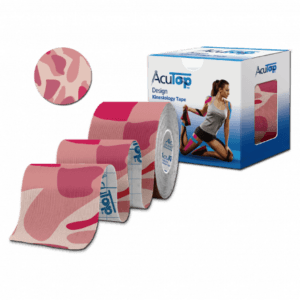
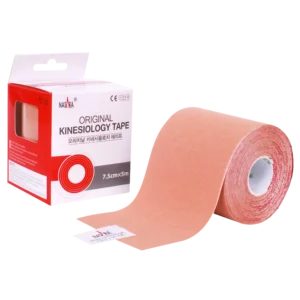
Kinesiology tapes are flexible adhesive tapes that are widely used in sports, physiotherapy, and rehabilitation. They are used both prophylactically before exercise and during the recovery process afterward.
How can tape help?
Tape helps:
- stabilize muscles and joints,
- reduce excessive strain on specific areas,
- improve movement control,
- reduce swelling and inflammation,
- reduce pain,
- improve blood circulation and lymph drainage.
Pre-marathon taping is often used to:
- for knee stabilization,
- for calf muscle support,
- To reduce strain on the Achilles tendon,
- for arch support.
In turn, they can help with the recovery process after exercise, especially in cases of minor overuse injuries, muscle tension, or inflammation.
It is important to remember that taping is not a "miracle cure", but rather an auxiliary tool that works most effectively in conjunction with proper load dosing, rest, and rehabilitation.
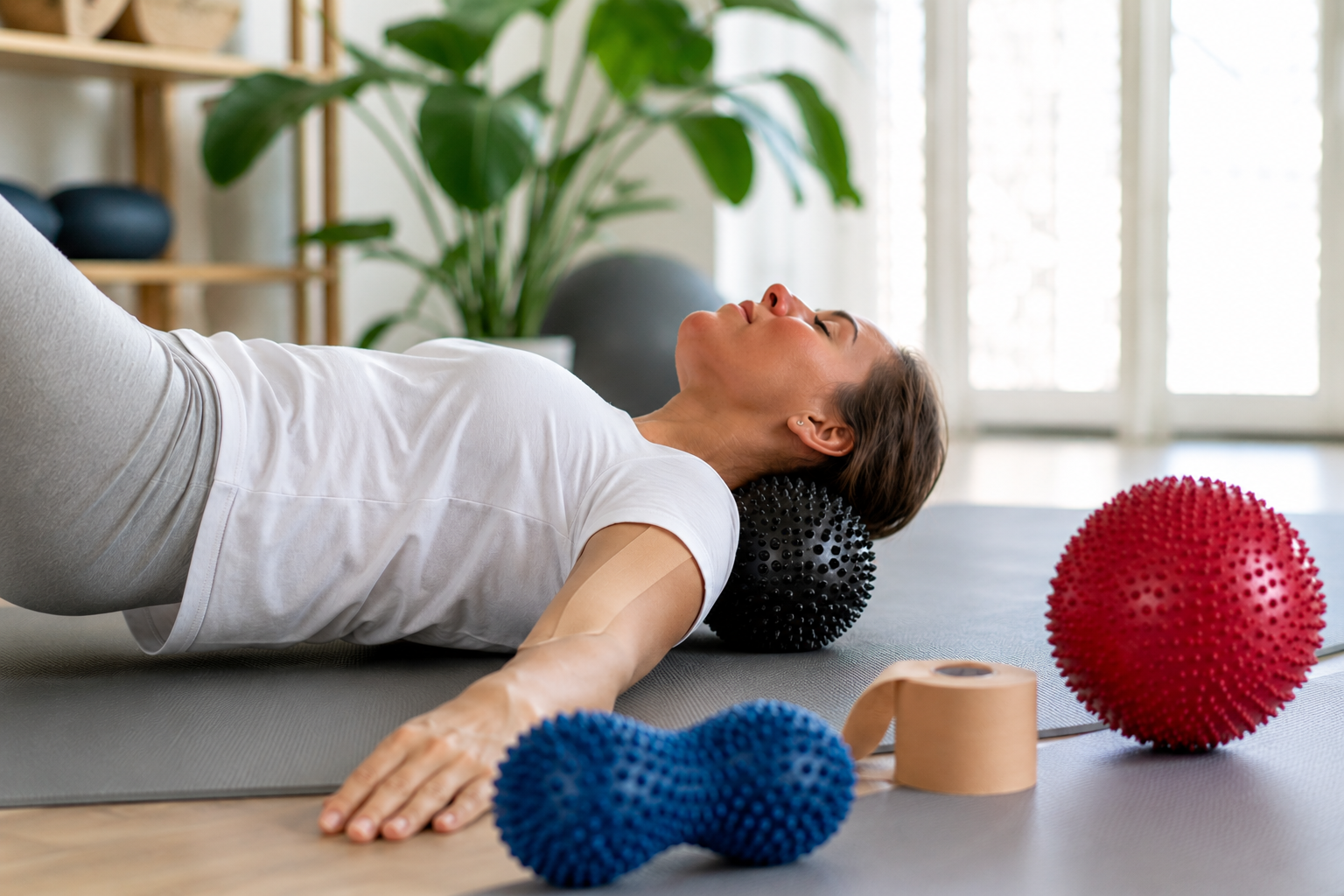
Rehabilitation balls - a simple but effective solution at home
After intense physical exertion, it is especially important to relax muscles and improve fascia mobility. One of the most popular and affordable solutions is various rehabilitation and massage balls .
They help:
- reduce muscle tension,
- improve blood circulation,
- relieve pain,
- improve range of motion,
- accelerate the recovery process.
Peanut ball – especially suitable for the back
One of the most popular rehabilitation balls is the so-called “peanut” ball. It consists of two connected balls and is especially suitable for back muscle massage.
The Peanut Ball shape allows:
- effectively massage areas along the spine,
- avoid direct pressure on the spine itself,
- release tension in the shoulder girdle and lower back,
- improve mobility after prolonged exertion or sedentary work.
It is often used:
- runners,
- physiotherapists,
- people with back pain,
- athletes after intense training.
Massage balls of various sizes and hardnesses
Helps stimulate deeper tissues and improve blood circulation. Often used for feet, calves and shoulder area. Double massage balls are suitable for relaxing the neck, back and spine area. Different levels of hardness allow you to adjust the massage to individual needs - from light relaxation to deep myofascial massage. Small trigger point balls are designed to massage specific tension points or trigger points.
Why is rejuvenation so important?
Many athletes focus only on the training process, but it is quality recovery that helps:
- reduce the risk of injury,
- improve athletic performance,
- return to training sooner,
- reduce chronic overload,
- improve overall well-being.
Overexertion without adequate recovery can lead to inflammation, muscle imbalances, and long-term pain. That's why tape, massage balls, and other recovery tools are becoming an increasingly important part of not only professional athletes, but also every active person's daily life. Nowadays, taking care of your body no longer means just training. Equally important is the ability to recover in a timely manner, listen to your body's signals, and help your body adapt to the load in the long term.