Free shipping on orders over €100
 Pay in installments or use leasing - for orders over €75. Learn more ›






How does stress affect blood sugar? It’s not just about sweets


When we think of blood sugar levels, food most often comes to mind – sweets, bread, pasta or other carbohydrates. But glucose levels are affected not only by what we eat. One of the most significant, but relatively little discussed influences is stress.
Have you noticed that you crave snacks more often during stressful workdays? Or do you find that after a sleepless night, your energy levels are lower and you crave sweets all day long? It’s no coincidence. Stress affects hormones, metabolism, and the body’s ability to regulate glucose levels.
What happens in the body during stress?
Stress in itself is not bad. Short-term stress is a natural reaction of the body that helps mobilize strength and respond more quickly to challenges.
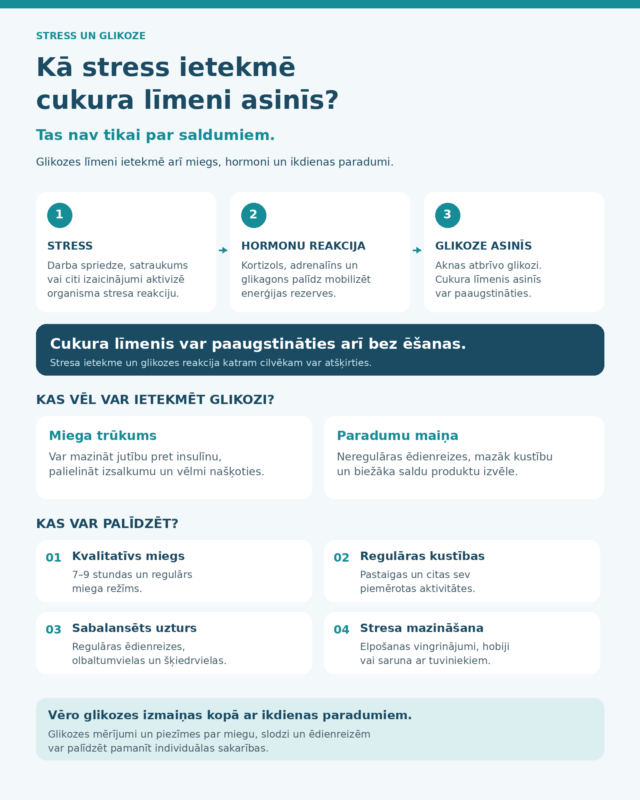
When the brain perceives a threat – whether it’s an important work project, an exam, a conflict, or physical exertion – the so-called “fight or flight” response is activated.
At this point, the body begins to secrete several hormones, including:
- cortisol;
- adrenaline;
- glucagon.
Their job is to provide the body with extra energy. To achieve this, the liver releases glucose into the blood, making it available to the muscles and brain.
This means that your blood sugar levels can rise even if you haven’t eaten anything.
Cortisol – a stress hormone with a big impact
Cortisol is often referred to as the stress hormone, but in fact it participates in many important processes – it regulates metabolism, blood pressure, inflammatory reactions, and helps the body adapt to change.
Problems begin when cortisol levels remain elevated for a long time.
Chronic stress can:
- increase glucose excretion from the liver;
- reduce cell sensitivity to insulin;
- promote the development of insulin resistance;
- make glucose control more difficult for people with diabetes.
That’s why sometimes glucose levels worsen even if your diet hasn’t changed.
Lack of sleep – the hidden risk factor
Not all stressful situations are emotional. Not getting enough sleep is also stressful for the body.
Even one or two nights of poor sleep can affect hormone balance and reduce insulin sensitivity. In addition, sleep deprivation increases the release of ghrelin, the hunger hormone, and decreases the activity of leptin, the hormone that signals satiety.
As a result, many people after a sleepless night:
- feeling hungrier;
- more often choose sweet or fatty products;
- feel a drop in energy during the day.
This can create a vicious cycle – stress worsens sleep, lack of sleep raises glucose levels and at the same time increases cravings for products that cause more pronounced glucose fluctuations.
Can emotional stress really raise blood sugar levels?
Yes. Many people with diabetes notice that anxiety, conflict, work stress, or even important life events affect their glucose levels.
This is because the body often perceives emotional stress as if it were a physical threat. Hormones mobilize energy reserves, whether it’s to run a marathon or prepare for an important presentation.
Interestingly, each person’s reaction may be different. For one person, glucose levels increase during stress, while for another, no significant changes are observed.
Stress can also affect our choices
Stress not only directly affects hormones, but also changes daily habits.
On stressful days, more often:
- we skip meals or eat irregularly;
- we choose sweet or calorie-rich products;
- we move less;
- sleeping worse.
All of this together can further affect glucose levels.
Therefore, when analyzing glucose fluctuations, it is worth looking not only at diet, but also at sleep in recent days, emotional stress, and daily rhythm.
How do you understand if stress directly affects your glucose levels?
You can’t always feel it.
Some people have no symptoms from high blood sugar. Others may notice fatigue, increased thirst, or difficulty concentrating, but these signs are not specific and can be related to other factors.
Therefore, the most objective way is to measure glucose.
If glucose levels are measured only once a day, the connection with stress may not be noticed. However, continuous glucose monitoring systems allow you to see glucose changes throughout the day and compare them with sleep, workload, physical activity and meals.
Many people are surprised to discover that glucose fluctuations are sometimes more affected by a stressful workday than dessert after lunch.
What can be done to reduce the impact of stress on glucose levels?
Although it is impossible to completely avoid stress, there are several habits that help the body cope with it better.
Priority – quality sleep
Try to get 7-9 hours of sleep and maintain a regular sleep schedule. Quality sleep helps normalize hormone function and improve insulin sensitivity.
Regular physical activity
Walking, cycling, swimming, or strength training helps reduce stress hormone levels and improves glucose utilization in muscles.
Even a 15-20 minute walk after work or after a meal can be a valuable investment in both your well-being and metabolic health.
Balanced meals
During times of stress, it is especially important to eat regularly and choose foods that provide a longer-lasting feeling of satiety – proteins, fiber, whole grains, legumes, vegetables, and healthy fats.
This helps avoid rapid glucose fluctuations and reduces cravings for sweets.
Find a way to relieve stress that works for you
For one, it will be meditation, for another, breathing exercises, a walk in nature, hobbies, or a conversation with loved ones.
The most important thing is to find a method that helps you relax regularly and reduce long-term tension.
In conclusion
Stress is an integral part of life, but it can also have a significant impact on blood glucose levels. This impact is determined not only by cortisol and other hormones, but also by the quality of sleep, daily habits, and our choices in stressful situations.
That’s why glucose control is not just a matter of diet. The better we understand our body’s response to sleep, stress, and physical activity, the easier it is to make informed decisions about our health.
Continuous glucose monitoring systems, such as LinX , can help you see these patterns and understand how your daily habits affect glucose fluctuations. This can be helpful for both people with diabetes and those who want to better understand and manage their metabolic health long-term.