Free shipping on orders over €100
 Pay in installments or use leasing - for orders over €75. Learn more ›





Coolness and darkness during migraines: what does the research show?

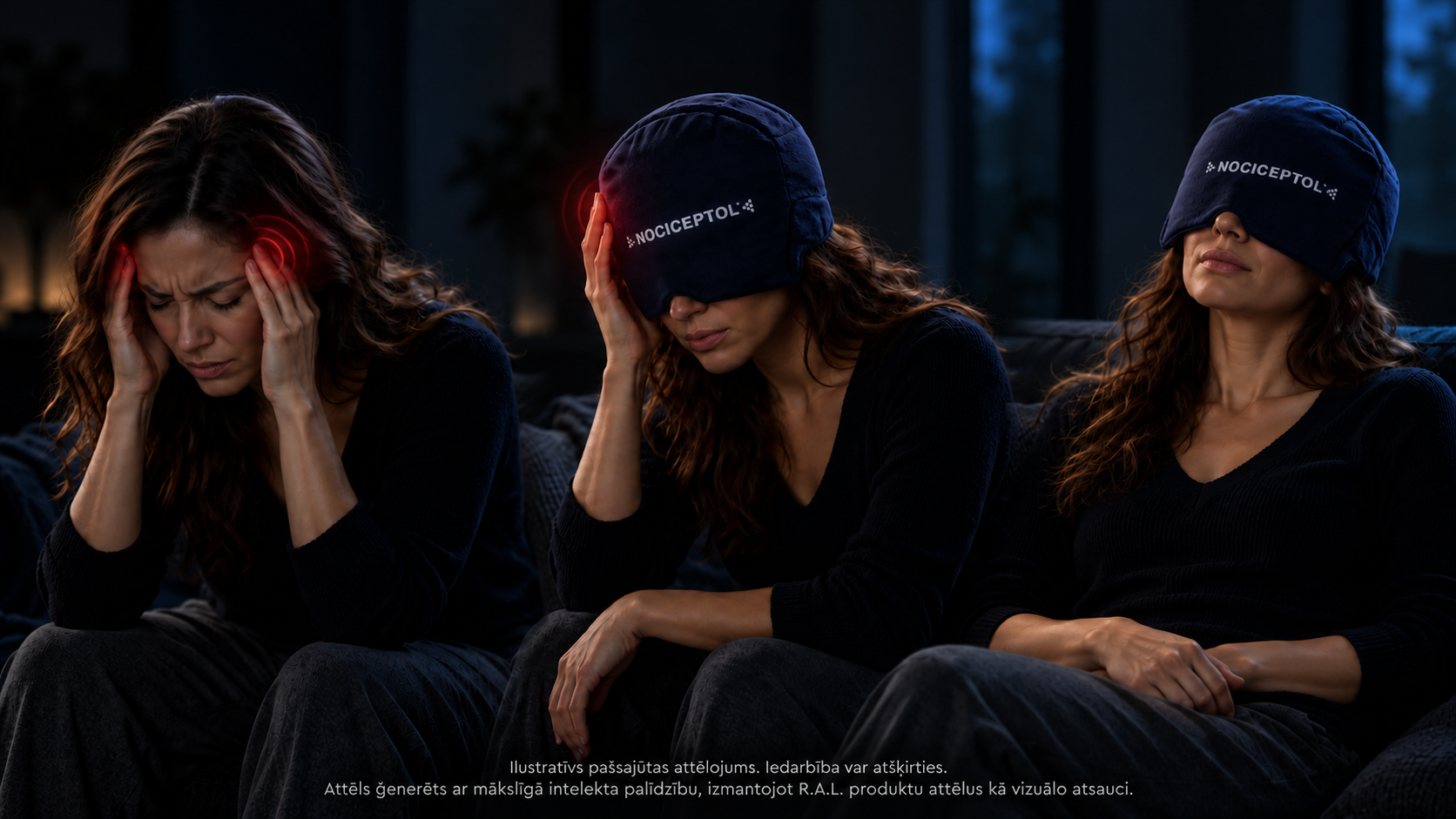
During a migraine attack, even everyday sensations can become unbearable: daylight seems too bright, sounds are distracting, and the headache makes you stop what you are doing. Migraine is a neurological condition that, along with pain, can be accompanied by nausea and increased sensitivity to light and sound. If, in addition to migraine, there are other physical or mental challenges – stress, responsible work, caring for children or, later in life, perimenopausal symptoms, the overall cocktail of discomfort can be particularly disruptive and significantly reduce the quality of life.
Migraine statistics
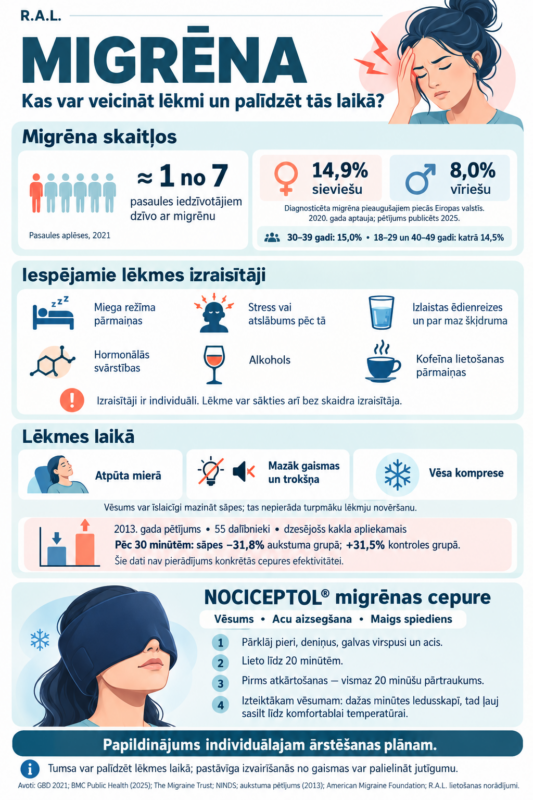
Approximately one in seven people worldwide lives with migraine , according to estimates from the Global Burden of Disease Study in 2021. Migraines occur more frequently in women than in men. This is also shown 2025. A study on five European countries was published in, which analyzed 2020 survey data from France, Germany, Italy, Spain, and the United Kingdom. The prevalence of diagnosed migraine among adults was 14.9% for women and 8.0% for men . In the same study, the highest prevalence of diagnosed migraine was in the 30-39 age group at 15.0% . It was also high in the 18-29 and 40-49 age groups, at 14.5% each. This means that migraine often affects people in the active stages of their working and family lives.
What can trigger a seizure?
You should start, of course, with preventive measures. The Migraine Trust lists several commonly observed factors that can aggravate migraine attacks.
- Changes in sleep patterns – not getting enough sleep, irregular sleep patterns, or sleeping longer than usual. This is especially difficult for people who work shift work.
- Stress and for some people also relaxation after a stressful period. In today's fast-paced life, it is difficult to avoid stress, however, it can be reduced somewhat with meditation, breathing exercises, walking, etc.
- Izlaistas ēdienreizes un nepietiekama šķidruma uzņemšana.
- Hormonal fluctuations , especially related to the menstrual cycle. In this context, hormonal fluctuations often cause other consequences and manifestations.
- Alkohols. For many people, even one innocent glass of wine can trigger a migraine attack.
- Changes in caffeine use - excessive amounts or a rapid reduction in the usual dose.
These factors do not always trigger an attack, and an attack can also start without a clearly identifiable trigger. Therefore, if you have noticed that migraine attacks start at a certain time of the menstrual cycle, for example, it is important to inform your doctor about this. If you notice that alcohol consumption affects it, it would be wise to avoid it.
Ko darīt migrēnas lēkmes laikā, lai mazinātu simptomus?
During a migraine attack, the environment also plays a role, including the opportunity to rest in peace, reduce lighting, and use a cool compress. The US National Institute of Neurological Disorders and Stroke lists these techniques for symptom relief. Of course, this is not possible in all situations right away. However, if such an opportunity arises, a migraine hat can help relieve symptoms faster and more effectively.
Can coldness relieve migraine pain?
The use of cold for migraines has been scientifically studied. A systematic review and meta-analysis published in the Journal of Clinical Nursing in 2023 summarized six studies that used various cold methods, including cooling gel headbands and hats.
The results suggested that cold may help to temporarily reduce pain. However, a sustained benefit beyond 24 hours was not conclusively demonstrated. Cold may be an additional aid during an attack, but these data do not prove that it prevents future attacks.
Konkrētu piemēru sniedz arī 2013. a randomized controlled crossover study, which was completed by 55 participants. It tested a cooling neck wrap. After 30 minutes, the pain intensity in the cold group had decreased by an average of 31.8%, while in the control group it had increased by 31.5%.
While various types of research into the causes of migraines and the reduction of attacks are still ongoing, this is a promising result.
Why do you want to cover your eyes during a migraine?
Increased sensitivity to light is called photophobia. In the case of migraines, it can manifest as discomfort or increased pain in both natural and artificial light. As the American Migraine Foundation explains, for some people, light sensitivity occurs before the headache or persists after it has passed. A darkened room can provide relief during an attack.
The effects of light are linked to processes in the nervous system. In a 2016 study on migraines and light sensitivity published in the journal Brain, scientists analyzed the effects of different colors of light on migraine pain and visual system function. The results indicated the involvement of the retina and thalamus (a brain structure involved in processing sensory signals) in migraine light sensitivity.
An interesting finding: In the study, green light was less likely to increase pain than white, blue, amber, or red light. This helps explain why not just the brightness of light but also its spectrum can affect how you feel. However, this finding doesn't mean that any green light will cure migraines.
Darkness during an attack and light in everyday life
Resting in the dark can help you get through an attack, but consistently avoiding light in your daily life can increase light sensitivity. The American Migraine Foundation recommends distinguishing between temporarily reducing light during symptoms and staying in the dark for extended periods of time. If light bothers you between attacks, it's worth discussing this symptom with your doctor.
Migraine hat: coolness and eye protection in one accessory
A migraine cap can be a practical way to combine head cooling with eye protection. The NOCICEPTOL® migraine cap from RAL is a wellness accessory that covers the forehead, temples, crown and eyes, providing coolness, darkness and gentle pressure.
This solution can be considered as an addition to an individual migraine treatment plan – during a migraine attack, to relieve symptoms. Studies on cold therapy help explain the possible short-term benefit, however, they do not prove that this hat stops a migraine attack or reduces the frequency of attacks. The migraine hat is small and light enough to take with you to work or travel and use it at times when other solutions are not possible. Using a migraine hat will certainly not disturb colleagues, family or friends during a trip or outing. This way, you can create slightly more favorable conditions for reducing the intensity and duration of pain.

How to use NOCICEPTOL® migraine cap?
The instructions for use published by RAL recommend:
- put on a hat, covering the forehead, temples, top of the head and eyes;
- use for up to 20 minutes;
- Take a break of at least 20 minutes before re-use;
- For a more pronounced coolness, place the hat in the refrigerator for a few minutes and let it warm to a comfortable temperature before putting it on.
During a migraine, a combination of several approaches can provide relief: medical treatment, rest, and fewer environmental irritants. Cooling and covering the eyes can be part of this approach if they provide comfort to the individual.
What causes migraines and what can make them worse?
The exact causes of migraines are not yet fully understood. Therefore, it is difficult for doctors to give recommendations on what to do or not to do to avoid them. Migraine is a complex neurological disease, in which hereditary predisposition and the functioning of the nervous system play a role. According to the British National Health Service (NHS) , the likelihood of migraines is higher in people whose close relatives also have this disease. Therefore, stress, lack of sleep or a certain food product is more accurately called a possible trigger of an attack, rather than the cause of the migraine itself. Consequently, quality and sufficient sleep, less stress, a healthy lifestyle - food and exercise - are what health experts recommend. However, what can be done practically when a migraine attack has begun, for example, at work. How to reduce its likelihood and intensity until precise and specific recommendations have been researched and implemented?